Differentiated instruction is a pedagogical approach based on the understanding that students have diverse learning profiles, interests, and readiness levels. By tailoring instruction to meet these varied needs, teachers move away from a “one size fits all” model to create an environment where every student can access the curriculum effectively.
1. The Three Pillars of Differentiation
Effective differentiation allows educators to adjust their teaching across three core areas based on ongoing assessment data:
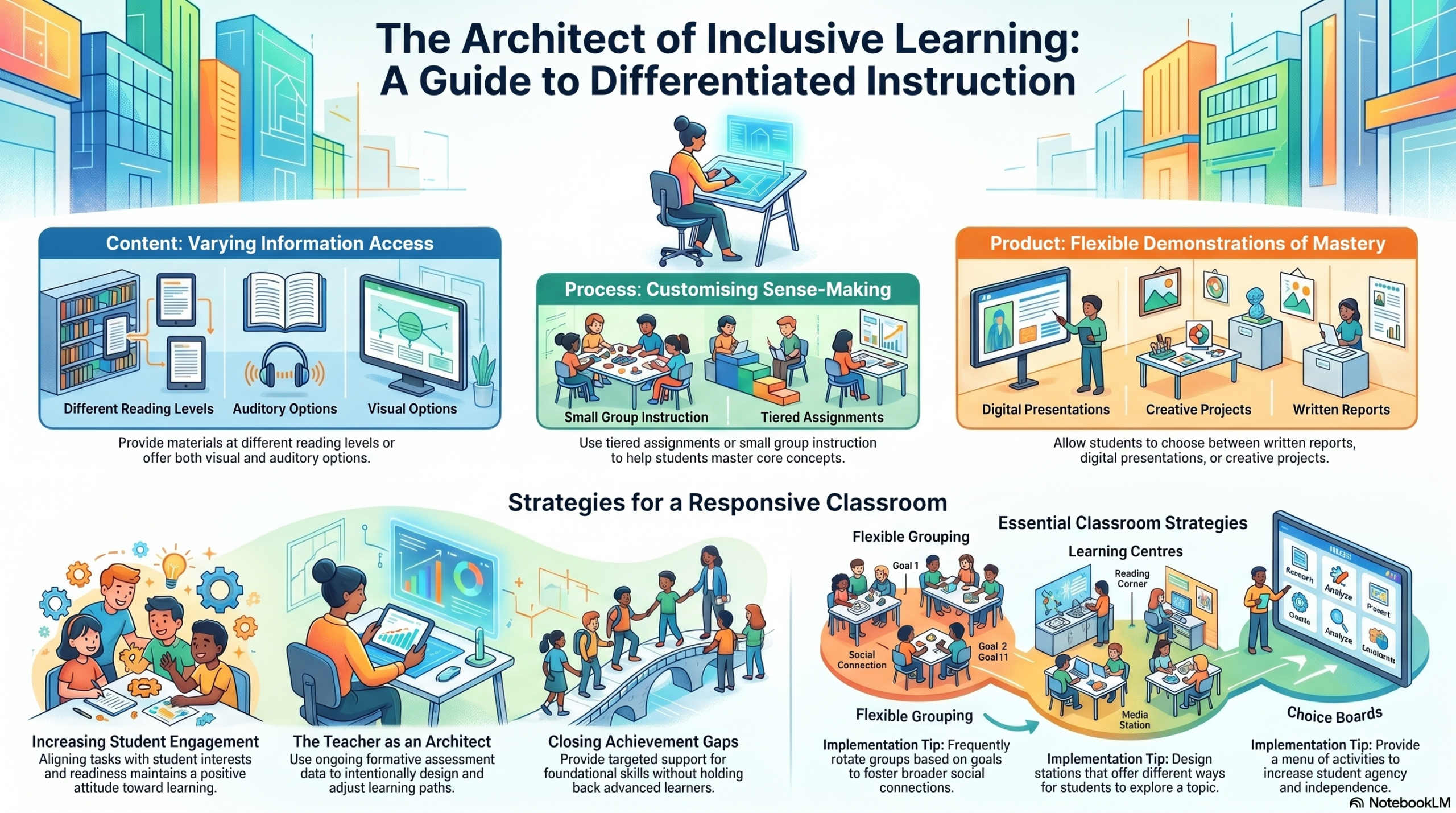
- Content: Varying the materials or ways in which students access the learning (e.g., providing text at different reading levels or offering both visual and auditory options).
- Process: Adjusting the activities or “sense-making” tasks through which students master a concept (e.g., small group instruction, tiered assignments, or independent study).
- Product: Allowing students to choose how they demonstrate their learning (e.g., a written report, a digital presentation, or a creative project).
2. Classroom Strategies for Differentiation
| Strategy | Implementation Tip |
| Tiered Assignments | Create multiple versions of an assignment that explore the same core concept but vary in complexity or support level. |
| Flexible Grouping | Frequently rotate student groups based on specific learning goals or interests to prevent “tracking” and foster broader social connections. |
| Learning Centers | Design stations in the room that offer different ways to explore a topic, allowing students to cycle through based on their specific needs. |
| Choice Boards | Provide a menu of activities that students can choose from to meet a learning objective, which increases student agency. |
3. Benefits for Diverse Learners
Differentiation is essential for inclusive settings, particularly for neurodivergent students or those with varying academic backgrounds.
- Honoring Cognitive Diversity: It recognizes that students process information differently and provides the necessary modifications to reduce cognitive barriers.
- Increasing Engagement: When tasks are aligned with student interests and readiness, students are more likely to stay engaged and maintain a positive attitude toward learning.
- Closing Achievement Gaps: By providing targeted support where it is needed most, teachers can help students master foundational skills without holding back students who are ready for more advanced work.
4. The Teacher as an “Architect”
In a differentiated classroom, the teacher acts as an architect who intentionally designs a learning path for each student.
- Ongoing Assessment: Differentiation is impossible without data; teachers must constantly use formative assessments (like exit tickets or observation) to determine how to adjust instruction.
- Embracing Flexibility: A differentiated classroom may look “busy” or non-traditional, but this is a sign of responsive instruction tailored to student needs.
- Managing the Environment: Successful differentiation relies on a well-organized classroom where students understand the routines for transitioning between varied tasks independently.
Reflection
Differentiation is a commitment to ensuring that high standards apply to everyone, even if the road to reaching those standards looks different for each student. Given your teaching experience, how could you design your course to allow different students to reach the same learning goal through their own preferred path or pace?